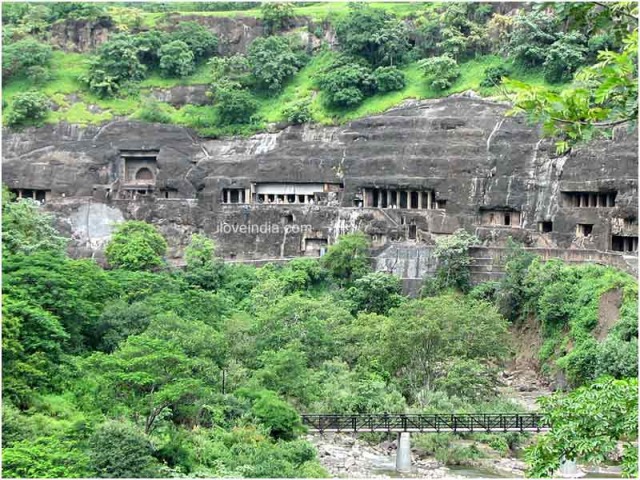
Hailed as one of India''s greatest artistic treasures, and a UNESCO World Heritage site, Ajanta is the location of some of the finest examples of ancient Indian sculptures and murals, housed in 28 caves that served as a major Buddhist monastery from the second to seventh century BC. Work started on these caves in AD 400 when Buddhist monks started carving out these temples and prayer halls from the cliffs located within the Sahyadri Hills.
The rock-cut caves demonstrate the skill and artistry that Indian craftsmen had achieved several hundred years ago. The amazing thing about these caves is that both the paintings and sculptures have withstood the passage of fourteen centuries and visitors are stunned by their complexity and beauty.
Historically Speaking
The paintings and frescoes at Ajanta relate the story of the development of Buddhisim from BC 200 to AD 650. The 29 caves, over a period of time evolved into prayer halls and monasteries. A greater part of the sculptures depict portraits of animals and gods, whereas the paintings depict life in the courts illustrations from the Jataka legends.
Sightseeing
Transport yourself back to the past in Ajanta – take a torch-lit tour of the Caves and marvel at the beautiful paintings that glow softly in the dark and gasp at the life-size and miniature sculptures that abound here. You can amble though the Ajanta Caves on your own or take a guided tour – the art contained in these Buddhist Caves are great works by themselves and one can spend hours studying them. Guides are helpful in explaining the pictorial stories and in pointing out some of the more amazing aspects of the paintings and sculptures that transform the rocky cave walls.
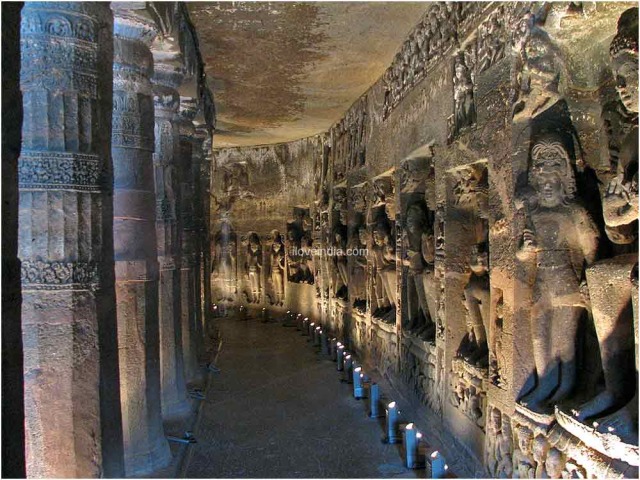
Begin with Cave 1 , which has some of the finest painting specimens, particularly the two bodhisattvas of Padmapani and Vajrapani and an impressive seated Buddha sculpture. Move on to Cave 2 with its beautiful ceiling painted to resemble a tent and its lovely animated sculptures. Walkthrough the other caves observing many more murals and frescoes, many of them illuminating stories from the Jataka tales, and episodes from the Buddha’s life. Exquisite sculptures capture your eye, their fine detailing adding to the aesthetic beauty of the Caves. Of particular interest are Cave 17 with its exquisite murals, Cave 19 with some astounding sculptures and Cave 26 with its impressive carvings. At Ajanta, you can spend the whole day transfixed by a single monumental image or get your fill of a million visual delights. Whatever you choose, chances are that you will come away with some wonderful memories.
Cave Timings : 9.00AM to 17.30PM Indian Standard Time (IST) Ajanta Caves remain closed on Monday
Where to Stay
Accommodation in Ajanta is limited and most visitors prefer to stay in Aurangabad or Jalgoan where there are a variety of hotels, from budget to luxury. Hotel Rama International is a five star hotel, Resident Park and Hotel Aurangabad Ashok are four and three star respectively.
How to get there by Air
The closest airport is at Aurangabad, 108 kms away.
How to get there by Rail
The closest railhead to Ajanta is Jalgaon which is approximately and hour and a half away. It is possible to hire a car or take a bus from here to the caves.How to get there by Road
Regular buses ply from Jalgaon and Aurangabad to Ajanta. Otherwise you can choose to hire a private taxi to take you around.
Getting Around
Whether you drive or take a bus to Ajanta you will get off a couple of kms from the caves. The only way to get to the caves is by one of the shuttle buses and to explore the caves you must do it on foot.Best Time to Visit
Winter months (from October to February) or during the monsoons are a good time to visit the Ajanta Caves. Weekends and holidays tend to be very hectic with plenty of visitors to the caves.
No comments:
Post a Comment